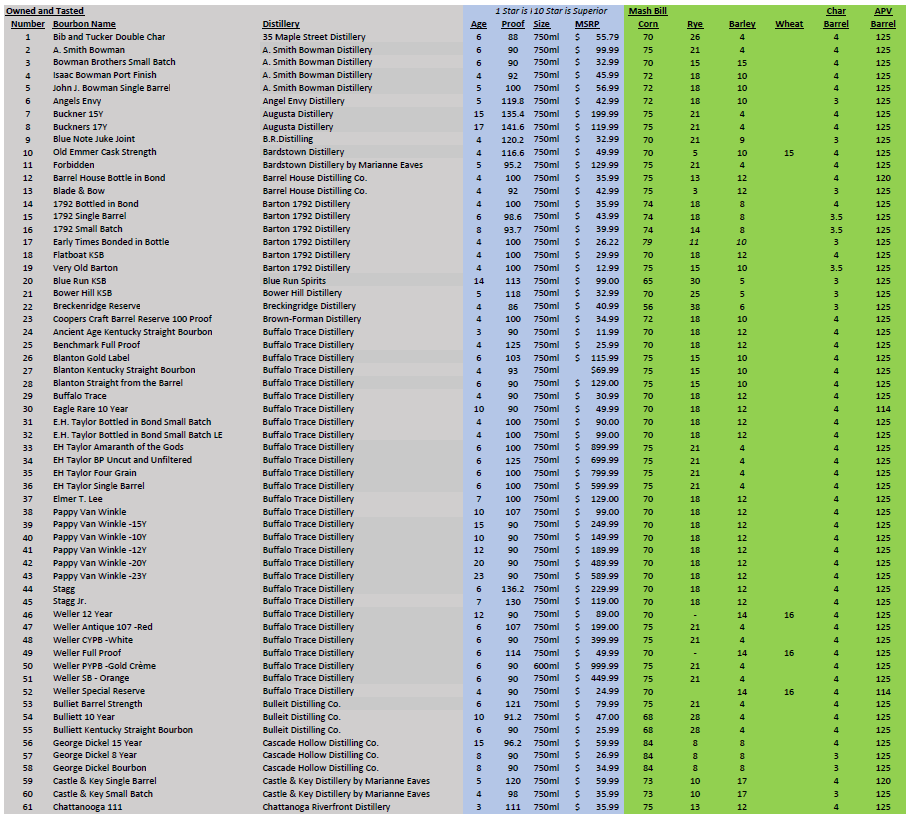
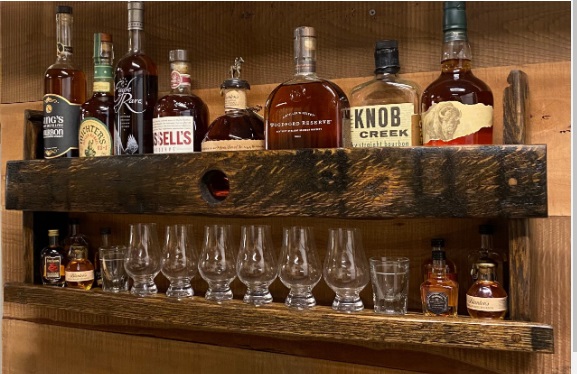
I have been asked to publish my list of bourbons that I own. Since I get asked all the time, “What bourbons have you tasted.” Well my friends here is current list….
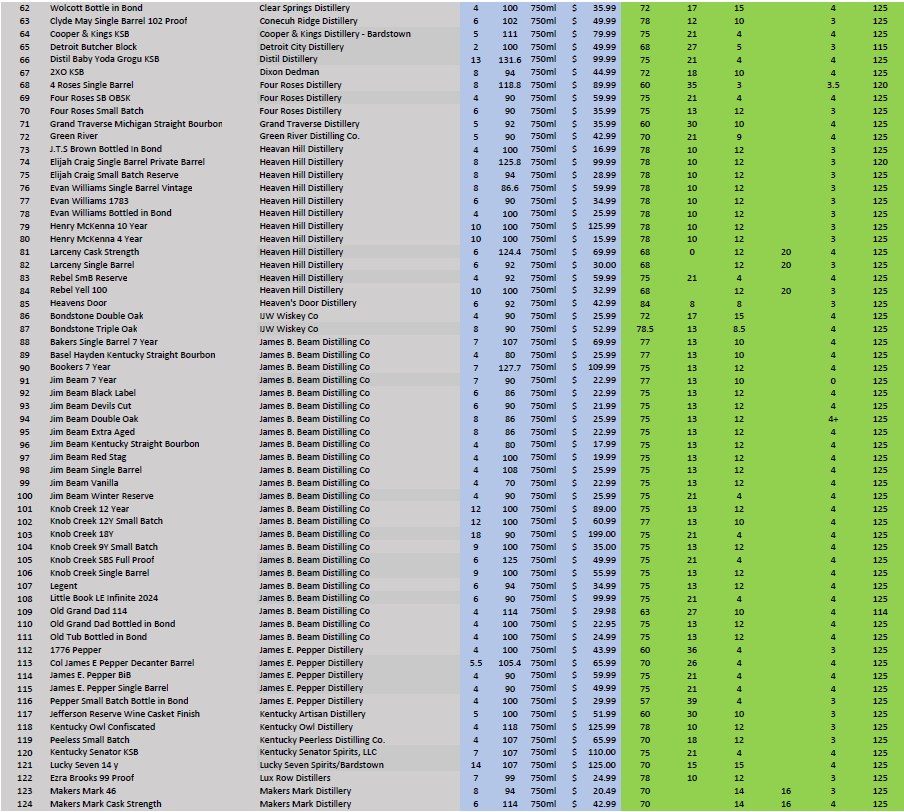

To be continued…..
– Rich Pesta
I have been asked to publish my list of bourbons that I own. Since I get asked all the time, “What bourbons have you tasted.” Well my friends here is current list….
To be continued…..
– Rich Pesta

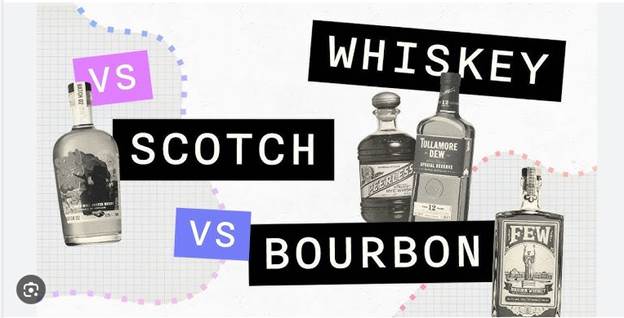
The most common thing I hear from people when I am out looking for a good bourbon. “You got any good whiskey like that Pappy or Four Roses has?” OMG do you all not know the differences in scotch, whiskey, and bourbon?
Well, if you give me your ear for a minute, I might clear up some confusion. Yes, they are all whiskey, in that whiskey is any spirit that is distilled from a grain to make alcohol. Here is where they all start to be VERY Very very different.

Scotch is a whiskey that must be manufactured in Scotland. Irish Whiskey in Ireland. Bourbons in the USA. Those geographic limits extend further with bourbon. Bourbon is considered the most regulated drink on this planet. Bourbon must be mashed, distilled, barreled, aged and bottled in the USA PERIOD.
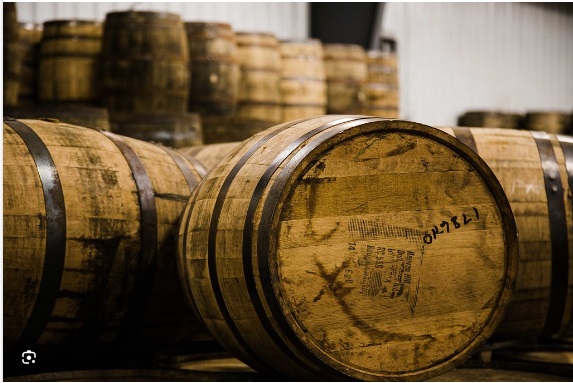
Both Scotch and Irish whiskey must be made, distilled barreled and bottled in their base countries. It can be single malt, double malt, multi malt. It is usually barreled in an old bourbon barrel. Bourbon can only be barreled in an American Virgin White Oak Barrel. That barrel is usually charred to a level 3 or 4 before the distillate is poured in to serve its time. Once Bourbon is poured out of the barrel, it may not be used to make another bourbon. It is finished for bourbons, but there are other markets that use that barrel. Such as, whiskey, Scotch, Irish Whiskey, Wines, Tequilla, Beer and few others.
There is no age limit on how long whiskey has to age in the barrel. There is nothing that say it has to even be aged or even put in a barrel. Bourbon Must age for minimum of 2 years. If it is aged less than 3 years it must have an age statement reporting that information. Bottled in Bond must be aged a minimum of 4 years. Most of the best bourbons are aged 6 or more years.
Bourbon is 51% corn, not more than 80%, then it ususally has rye, malted barley and sometimes wheat in the mash bill or recipe. Whiskey is made with any grain at any level as long as it makes a grain alcohol.
There are no limits on the proof of alcohol for Whiskey. It can be barreled at any proof; it can be bottled at any proof. Bourbon cannot be barreled for aging at anything above 125 proof. I can’t be bottled for less than 80 Proof. In fact, the term “86 that” comes from a time when people were taking 100 proof whiskey and cutting it with anything they could to increase what could be bottled, leaving the consumer with an inferior product and usually dangerous.
Bourbon gets its color, taste, smell from aging in that charred virgin oak barrel. It may not contain any artificial colors or flavors. This rule does not apply to whiskey. In fact, there are many flavored whiskeys. And coloring can be added to make whiskey to make it look appropriate and appetizing.
Because of the rules and restrictions on bourbon, it is made exactly the same by ALL Bourbon distilleries, which gives it a lot of integrity that that product is pure, exact and has no rule breaking to give the customers a bad or inferior product. In fact, because of using just those rules you get a great product and something you can rely on. For more information please refer to the Bottle in Bond Act 1897, The Food and Drug Act 1905 and the Bourbon Act 1963.
To sum it up, drink your whiskey if you like whiskey, rather its flavored, corn, rye or Tennessee. Drink you some Scotch, I like Glenfiddich and McMillian. Go get some Irish Whiskey like Jameson or Pierce. But do not confuse any of that for something as golden, pure and delish as bourbon.
-Rich Pesta
I am sure a lot of y’all have been to a distillery and taken in a tour here in Kentucky. I know I have been to a few now. If you haven’t not and you are into exploring or like new things, Or this is a big one, love bourbon, then you most definitely need to do a Kentucky Distillery Tour. Here is a bonus, The Kentucky Distillery Association (KDA) has put together a Kentucky Bourbon Trail. Yes sir or ma’am. The KDA working with its members, which are all most all of the Distilleries in Kentucky, has worked out and published a list of Distilleries that you can visit and you can tour.
So, depending where you plan on visiting in Kentucky, or maybe you are staying a while, you can visit the Bourbon Trail. It used to be that you should visit the KDA Home, get the tour book, visit the distillery and get a stamp or coin for visiting. I haven’t seen that in action any more. But the Kentucky Bourbon Trail is a good start for where the Distilleries are located, a quick background of the distillery, how to contact them to setup a guided tour. I would recommend picking one up, you can even get it on Amazon now.
I will list 3 areas where there are some good distilleries to visit. Bardstown, Louisville and Lexington. There are a lot more place throughout Kentucky, these 3 have a lot of distilleries in the areas.
Bardstown has a few great ones. There is Bardstown Distillery, Lux Row Distillers, Heaven Hill Bourbon Experience, Willett Distilling. Four Roses is near and down the street not too far is James B. Beam Distilling.
Louisville is where a lot of people like to go and start the Trail. There are few great places to tour, Rabbit Hole Distillery, West Sixth NuLu, Stitzel-Weller Distillery (not to be confused by where Weller Distillery is located.), Angels Envy, Mitchers Shively Distillery.
If you travel from Louisville to Lexington on I-64 you will go by Jeptha Creed and Bulliet Distillery and the new Whisky Thief Distillery. If you travel from Bardstown to Lexington along the Bluegrass Parkway, you will pass by the Four Roses Distillery, Wild Turkey, and the Lawrence Bourbon Company.
In the Lexington Area, you are near a few that are either in Lexington or very close. Alltech and Lexington Brewing Company, Bluegrass Distillers, Fresh Bourbon Distillery, RD1, Barrel House Distilling, James E. Pepper Distillery.
Close to Lexington is Frankfort and close to some other amazing distilleries. The Woodford Reserve Distillery on the way to visit Castle and Key Distilleries, J Mattingly, Buffalo Trace Distillery, Saddlestone Distillery.

Brief mention for some distilleries that are in the area but do not do tours. Glenns Creek Distillery and Old Crow Distillery.
All of the tours usually end with a tasting of the bourbons and whiskeys that they distill at the locations. Some may even offer a discount on some of the bourbons.
Take a tour and sip the corn of Kentucky.
Rich Pesta

I feel at this point a brief history of Kentucky is important. To bring some meaning into my blogs. That it will present some focus in what could be considered just random writings on bourbon and how is became such a fun part of my life.
As an influx of people moved from Europe to the Americas, some came into the Pennsylvania and Virginia areas, some came a little further west, to find better land and fertile grounds to plant crops and make a life. Kentucky was originally an extended part of Virginia.
The first five towns that were settled in what is now Kentucky, were towns that the settlers came in, and were established, not incorporated. These towns began as forts, and would grow to have cabins, courthouses, taverns, churches. Some or maybe all of these towns were abandoned at some point, but the settlers came back and eventually these towns grew into the towns we now know and love. Some of them had name changes, some would become local famous, some would become world famous.
The first town established in what is now Kentucky is Harrod’s town. It is now called Harrodsburg. It was founded in June of 1774. James Harrod and group of 31 men came and attempted to start a settlement. They named the town after James Harrod after they returned. The town grew to 198 in 1777 and was the Kentucky County seat in Virginia. When Lincoln County was established it became the county seat. Harrodsburg, Fort Logan and Fort Boonesboro served at the as the stronghold for the Frontier and the life in Kentucky.
The second town established is Stanford and was founded in May 1775. Benjamin Logan and a group of men headed through the Cumberland Gap and moved West instead of heading to Fort Boonesboro. Stopping at area called Buffalo Springs, John Floyd name the waterway Saint Asaph Creek. The Settlement was called Saint Asaph and Benjamin Logan planted his corn crop here and returned to Virginia to gather his family and return. Upon returning they built Fort Logan and more people arrived and settled into the area. Despite being significantly smaller than Fort Harrod and Fort Boonesboro, Fort Logan with stood may attacks by the Natives. Eventually the County Seat of Lincoln was moved from Harrodsburg to Fort Logan, now called Stanford. In 1787 the first courthouse was built and the first church. One of the masons who worked on the courthouse and church was Evan Williams, who would eventually move to Louisville.

The third town was founded in the spring of 1775 is Lexington. This is a little complicated. In 1775 a group of frontiersmen were camping in the area and decided to call the soon to be town Lexington after the Battle of Lexington. It was a frequently visited spot by travelers and it was in a central location on many pioneer trails. The major establishments of the town didn’t start until 1779 when a group of of settlers came from Harrodsburg and began building Fort Lexington. The Fort stayed strong and quickly grew and became a staple of central Kentucky
Town four was founded as Lee’s Town, now called Frankfort, in June of 1775. Hancock and Willis Lee, two brothers from Virginia, came to Kentucky and surveyed land located on the Kentucky River. It was established after Boonesboro and was the 2nd town established by pioneers on the Kentucky River. Willis Lee was killed by the Natives and during the year of the Bloody 1777’s, the residents left the area due to all the attacks by Natives. The people eventually returned and when Kentucky became a state in 1792 an area just north of where Leestown was located was offered to become the Capital and Frankfort was chosen as the name and would thrive as the town grew.
The fifth town is McClelland. With permission from John Floyd, John McClelland went to an area called Royal Springs, just north of Elkhorn Creek and established a settlement in 1775. He made many improvements and then returned to gather his family from Pennsylvania. After many fights with the Natives, and loosing the life of McClelland, the settlement was abandoned. The town would be revisited and settled by a Minister by the name of Elijah Craig in 1782. He would rename the town Lebanon. It would be renamed Georgetown after George Washington eight years later.

One of the first trails from Wheeling Virginia, Zane’s Trace, lead to an area on the Ohio River. There was a natural harbor that was first settled sometime around 1775 and it was named Limestone Station by Simon Kenton, but all abandon it do to fighting the Native Americans. John May acquired much of the land around Limestone and Daniel Boone established a trading post there. in 1787 it was established as Maysville. There was a trail that lead down from Maysville to Leestown (now Frankfort) that was frequented by buffalo and was referred to as the Buffalo Trace.
Louisville was established in 1778 by Lt. Col. George Rogers Clark by an Order of Gen. Geo. Washington and was to be used as a stronghold against the British. This would be the first settlement in the area of Corn Island on the Ohio River. In 1779 settlers moved ashore and the town of Louisville was born. In 1780 the Virginia Assembly approved the City Charter and approved naming it after King Louis XVI for his assistance in the Revolution. In 1828 the City was incorporated under the Commonwealth of Kentucky.
First settled by the settlers moving from Virginia, Bardstown was established in 1780. It was named the county seat of the newly formed Nelson County, Virginia in 1784 and it was formally established in 1788, and was incorporated by the Commonwealth of Kentucky in 1838. Bardstown is named for the pioneering brothers of David and William Bard who surveyed and platted the town. The trail and parkway from Lexington and Frankfort is now called the Bluegrass Parkway and for most is a major part of the Kentucky Bourbon Trail.
I truly hope this helps get a glimpse of the history of the people and settlements as they came here to Kentucky. I will be talking about how they interact with bourbon in upcoming blogs.
Thank you for your ears, keep on sipping that corn.
Rich Pesta
I want to say a few things about bourbon. For me, it’s an exploration; I love history, talking to people, and finding treasures. History links me to who I am, the long past behind me that brought me to this point in time. That journey has allowed me to meet many people, with many views and many stories. My treasures are of a different kind. Yes, I like finding that rare bourbon, especially at a reasonable price, but I find bits and pieces of information that enlarge my picture of a more complete understanding of what was, who was there, and what they were doing. The when and how is usually the first found part that leads me to the other answers.
So I have been on a journey, to find out what is bourbon? The first thing you learn to is that the history of Kentucky involves bourbon and the history of bourbon involves Kentucky. They are inexorably linked together.

Kentucky is the birthplace of bourbon. The people that came here to Kentucky, brought with them the equipment and skills to distill. They distilled water, wine and whiskey. The whiskey they started to distill here was based on the best grains available. Corn and wheat grew easily here in Kentucky, and could easily be traded for rye and barley, which need a more wet environment. The water here was great too, it was filtered through the limestone and had no iron and a good taste.
Another thing Kentucky had was oak trees, and specifically white oak. That happened to turn out to be the best place to store the whiskey. There are lots of stories for the one who charred the first barrel and why? I might explore that in a latter. But for now we have whiskey distilled with corn with limestone water, add some barley and either wheat or rye, and sometimes both, then add distillers yeast. They put that into the charred oak barrel, sometimes it could take a year or two to get that to the market.
Sometimes, it took longer, or it was setup in a barn to actually age because a customer ask for that specification. Because in that oak barrel, magic was happening. That distilled liquid was mingling with that barrel, the barrel was reacting to the environment. Cold, hot, windy, calm, shady, sun and a particular mold that wasn’t harmful but wanted alcohol. What came out was this beautiful darkening amber color with rich flavors of maple, brown sugar, honey, spices and fruits
The demand went off the charts in New Orleans and out west. The west was where gut rot whisky was the norm. Now they can get something with a taste. Something born here in America, its own spirit. But then the greedy bad folk, tried to get a profit by adding impurities of artificial flavors and colors to fool the consumer and make a quick buck. Lots of folks got harmed or died.
A couple of Kentucky distillers tried to stop that and wound up creating the Bottle in Bond Act. The first law to protect consumers from bad products in 1897. But in doing so it defined what bourbon is, by laying out rules. Thus inspired the Food and Drug Act in 1905. In 1963 The Bourbon Act was passed and signed into law.
it is easier to start the explanation of what is bourbon using the ABCs.
A is American Spirit, bourbon is a uniquely American product. It can only be made here on American soil. While Kentucky does manufacture 90 to 95% of the worlds bourbon, it can be produced anywhere in the United States of America. It has to be mashed, distilled, barreled, aged and bottled in America.
B is for barrel, you can only use American grown virgin white oaks to make the barrels. They may only be used once in the aging of the distillate. Most used barrels are used to make other products like beer, wine, scotch, other whiskeys and tequila.

C is for corn, all bourbon mash must contain at least 51% corn. This is cooked upto a certain temperature then other grains are added, grains like wheat, rye and barley. When bourbon is cooling down, the yeast and set back are added. The set back is from the previous batch and once its added you now have sour mash, if not its a sweet mash.

D is for distilling. The distilling is a process that has proven itself over time. That mash bill or recipe that was made is given time to setup with the yeast turning the sugars from the grain into alcohol a distillers beer through fermentation. It usually can get up from 7% to 14%. Not really meant for drinking. But then it is put in the still, there are all sorts to of stills, but for easy discussion we will assume a cooper pot still.
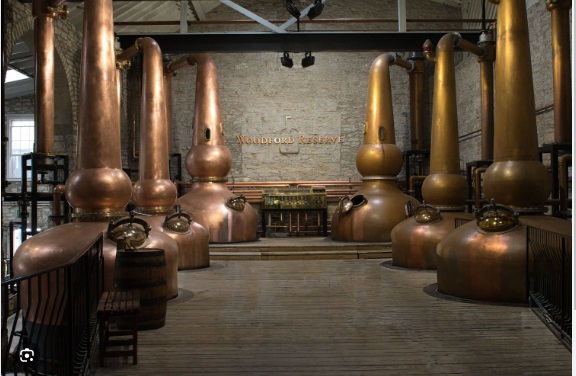
The distillers beer is put into the still and heated, since the alcohol evaporates sooner than water, it raises to the top of still and is cooled down untill ot drips out into a container. This is low wine distillate of raw spirits and is typically around 20 to 25% alcohol or 40 to 50 proof. This is then put into a 2nd still and reheated into high wine distillate. This process helps remove the unwanted elements and oils. More on Head, Hearts and Tails in the future. The high wine distillate that most shoot for is around 125 to 140 proof, about 60 to 70% alcohol. It cannot exceed 80%. This is usually refered to as white dog or white lightning. It usually odorless and tasteless. There are some tricks to get some taste and smells, again for a future talk. Now its almost ready for the barrel.
E is for entry level. This refers to the alcohol level that the white dog gets put into into the barrel. It can be no higher than 125 proof. You typically see entry levels at either 115 or 125. Now it is possible that the proof level can go up while in barrel, usually not down.

F is for filling the bottle. The barrel has now aged a few years and is ready to be bottled. The bourbon is put in the bottle at no less than 80 proof or 40% alcohol. The bottle can be filled filtered or unfiltered. Can be full proof at what came out of the barrel, also called cask strength, the type of batch can also determine this aspect.
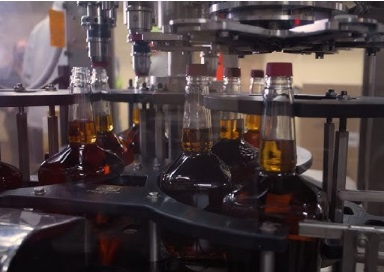
G is for genuine. No artificial colors. No artificial flavors. The bourbon can be batch mixed into large batches, not all that great IMO due to removal of individual barrel flavors and uniquenesses. It can on a small batch, 2 to a hundred, but is typically around 10. Single barrel is just that, a single barrel that goes into bottles without a batch mixing.
I think this leaves only a brief explanation of Bottled in Bond, Straight Bourbon, and flavored bourbon. Straight Bourbon means the the mash, distillation, barrel aging and bottling is done at 1 location. Bottled in Bond means it is a Straight Bourbon but was aged in a Bonded warehouse that is monitored and controlled by government agents. In addition, the bourbon must be aged a minimum of 4 years and be bottled at exactly 100 proof. A bourbon can be aged 2 years, but any aged bourbon less than 3 years must have an aging statement on the bottle. Most enthusiast will agree the better bourbons start at minimum of 4 years.

Flavored bourbon is technically a whiskey because flavoring was been added. When you see a bottle that is labeled Flavored bourbon, they are wanting to point out that it not just flavored whiskey, it is bourbons that is then flavored. Some bourbons are also finished in other types of barrels, to give a more robust flavoring.
I sincerely hopes this starts you on the journey to better bourbon and discoveries.
Looking forward to discussing more about my favorite vegetable drink.
Rich Pesta
Learned preferences on bourbon selection.
Who I am is a simple man that bought a few bourbons to try. That has turned into a passion, now maybe approaching obsession. I have purchased and now tasted more than 160 bourbons. So what follows is an opinion of what i have experienced. So please take this as a statement to learn as i learn about how to get the most out a great tradition of bourbon tastings.
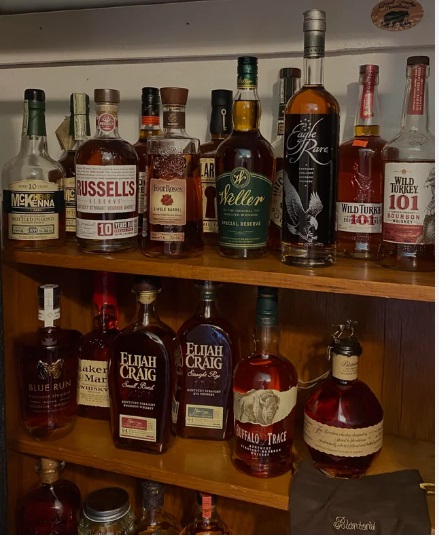
Now to me, Kentucky aged bourbon seems more flavorable. The assumed result of the barrel experiencing weather fluctuation, making Tennesee, Indiana, and Lower Ohio the next choices for good bourbon. But i have sampled good bourbons from other states, but to me it seems that weather patterns and dates need to line up for best taste.
Taste is important, but so is smell, apparance, but i also love a good presentation. Bourbon smells can be very complicated. Since smell is the first of our senses to develop, it can tremendoulously enhance the bourbon experience. I love the various methods for trying new bourbons, new bottles and new glasses. If you use the full nose enhale, you can get great initial smells, come back to this method a few times in your tasting. The breath out breath in method can get you more smells as your breath breaks the surface of the bourbon to release aromas. The swirl and sniff method accomplishes even more aromas. For new bourbons i will apply the clap and double clap method with a single drop of bourbon in my hand. This can lead to discoveries of the essence of that bourbon. What ever methods you choose, please note the visual quality of your bourbon.

First time i tried a real bourbon, i was immediately struck by the beauty of the color and hue of the liquid. It was a dark amber that contained consistency as i held it to the light to examine. As i rolled it in my glass i then discovered how it coated the glass and how it slowly flowed back into the bourbon or came together forming beads that either stayed on the glass or flowed back down to join the bourbon. Since then i always note the visual properties of the bourbons I taste. I have seen blondes, ambers to red, chestnut to a liquid brown. Some good, some great but always entertaining.
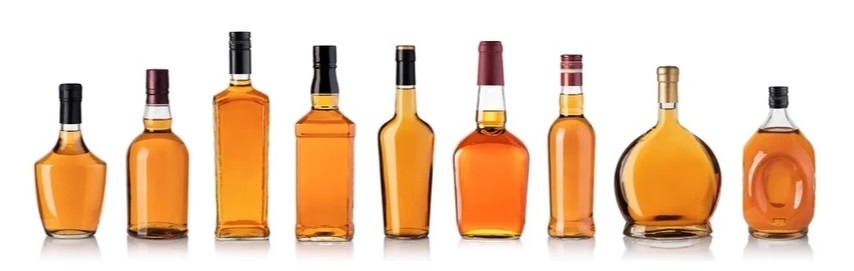
Nothing to me is as enjoyable as the bottle of a bourbon, the cork and the label. The glass bottles seem almost as unique as any glass art you can find. I find that each bourbon i encounter is magically transformed into a special more uplifting quality than the comment “what so special about bourbon? Its just another alcohol!” No. Its much much more, starting with the bottle. There are so many unique shapes and colors and textures. Just the collecting of these bottles would spur on an obsessive hobby. There is some craftsmanship that goes into these bottles. I for one am impressed.
So you have the bottle presenting the bourbon. The color and hue making the liquid desirable. The smells and aromas teasing you about the treat that is coming from the glass. So just a breif visit, into your glass, whichever you choose. I prefer a glencairn glass, pronounce Glen Karen. But a small whiskey snifter is just as capable. For those who do not prefer straight or neat there are a variety if glasses that will render you with pure happiness. If you may want some ice or water, a good rock crystal or stemless wine chalis is great. For that old fashion, never get less than a cooper mug.
If you do decide on water, please never more than a dram. If you like it iced, get an ice ball. They last long and give your bourbon a smoothing flavor. The water should even out the alcohol but bring out those great flavors.
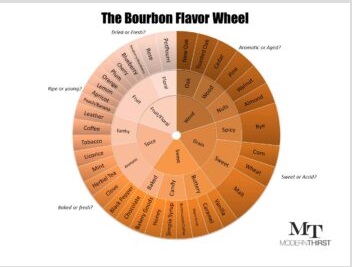
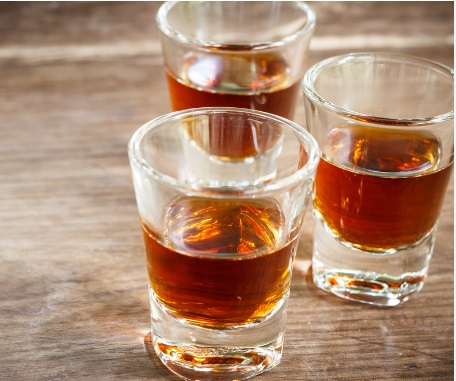
Speaking in flavors, if you are tasting a bourbon, it is not to be shot like vodka or tequila, to quickly get your alcohol level so high that the world and your head are fighting for the control to be in a spinning contest. Its meant to be sipped and savoured. Most first sips are an introduction to the bourbon and since most bourons are 40% alcohol to 62 5%. You usually get what is refered to as the bite or pepper of the bourbon. The next few sips open up a variety of flavors. Like the sweet corn mash, the charred oak, a caramel, sweet honey, crisp wheat, soothing rye, brave barley and so many more. Your experience is almost complete for that first tasting.
This is where i usual experience more of the available aromas. I have smelled in the bourbons items such as apricot, oranges, plums and raisins. Spices cine wafting up such as cinnamon, vanilla, honey. You can get the senses if the corn, the rye, barley, and wheat. Then there are the aromas of the oak barrel wood. I bought a smell kit to help me identify those great scents, i am glad i did. This brings me to the finish.
Some bourbons finish well, some finish great, others are but not quite up to the hype. I like a bourbon you can remember. The memory makes me come back time and time again. Do you recall the tastes, the smells, the look, the bottle and label? Does it give you pleasure to recall that first tasting? That’s is when i re-pull that bottle out and start my follow up tasting.
Thank you for listening, hope to relate more findings soon.
By R.Pesta Novice Bourbon Enthusiast.
I was born and raised for the most part, around Detroit. It was a good time and a bad time for Detroit and for me, but this is not about my autobiography or the history of Detroit. This is about whiskey and bourbon and the discovery of what that means.
When I was young, my father took me to the bar on my 21st birthday to celebrate. He ordered me up a beer and a whiskey. I took the whiskey and shot it back and quickly followed it up with the beer. Choosing to hold it down and not hack all over the bar. The beer was Altes and the whiskey was Jack. My Dad seeing i was struggling, ordered up a vodka and a Jim Beam. Upon deliver i tossed both back and followed up with a beer. My Dad was like, “No Son, you sip at that!” I didnt know what he was talking about, i had never seen anyone sip at vodka or whiskey. So i just said “Ok Dad!” And let it slide out of my mind. It took 29 years and moving to 3 states to learn what he meant.
I lived in Florida for a time, and like any person who is into hunting, you like good food. Through many a friend i had learned that a good whiskey can make or break a good bbq. My preference was for a whiskey labeled, 1792. it left a good flavor and was easy to cook with on the grill. I had poured it in a shot glass a time or two, and of course, threw it back, followed by a cervaza. I had learned over years about beer, and all the levels and what i liked and didn’t like, including what is ok, good and great. Then I moved to Kentucky
I moved here for family, i needed them, they needed me. But after working and family, i asked, what does one do in Kentucky? I was told horses, bluegrass, basketball and bourbon. But not necessarily in that order. So i watched UK, visited Keeneland, drove around and admired all the horses and horse parks, and I was already a fan of bluegrass music and that culture. So i asked someone about bourbon, and they said Kentucky distilled more than 90% of the worlds best whiskey in the form of bourbon.
I was like, wait! Hold the press, whiskey, bourbon. Ok now i have slugged back some whiskey in my time, what’s the big deal? The person i was talking too, was No, one does not chug bourbon, one sips it and it enjoys Americas one and only native spirit. I didn’t understand.
So he took me to a bar, ordered up 2 Woodford Double Oaks in Glencairn glasses. He then said the first tastes is gonna be harsh or what they call pepper. Only take a small sip, like resting your tongue in the glass, then let it slowly touch all your tongue and slide down your throat. I did and it was a little burn, but completely different than shooting whisky. He then said, now your ready to taste, take another tiny sip, hold in on your tongue, swallow then tell me what you taste. I was amused and my tongue was happy with that sweet nectar, i tasted honey and brown sugar a little apricot and was that cinnamon?

That was my introduction to bourbon and the beginning of the fun adventures i am still experiencing. I now own 170 different bourbons, i collect, but for purposes of tasting and sharing. I have been on many bourbon tours and barrel picks.
So start sipping your bourbon, and i will blog you later.
Rich
 More than sipping corn